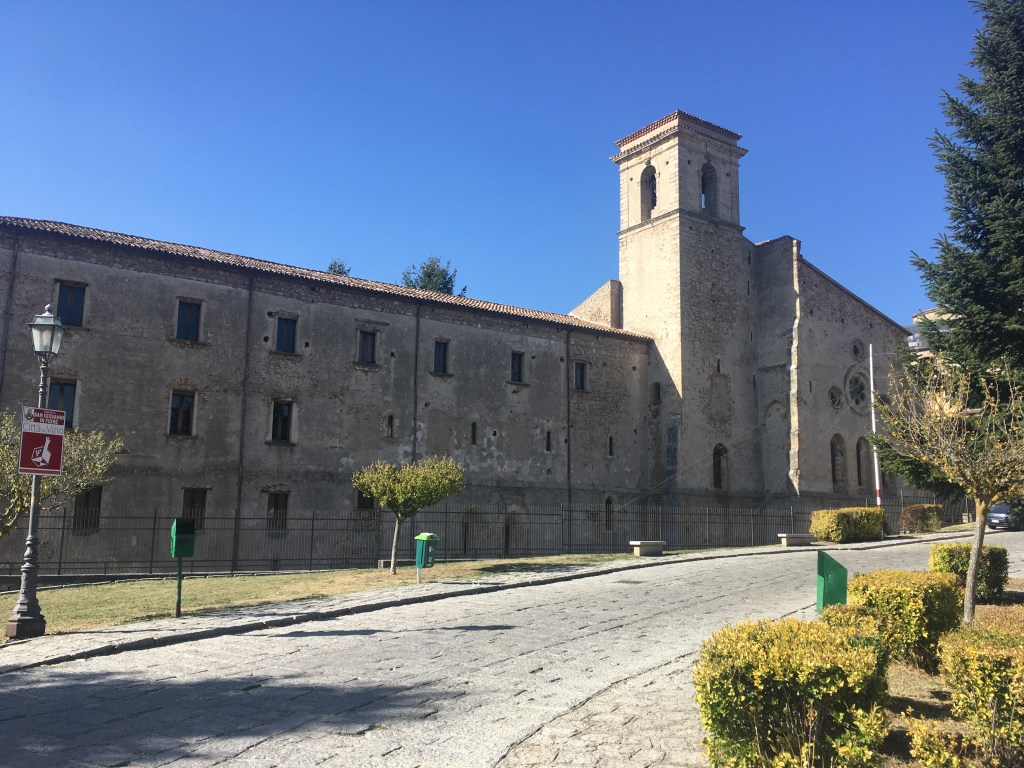
HISTORY OF SAN GIOVANNI IN FIORE
From Wikipedia – “In 1189, Gioacchino da Fiore founded his abbey outside today’s town center in what is called the Fiore Vètere neighborhood. Several years later in 1194, the Holy Roman Emperor Henry VI of the Hohenstaufen family granted the abbot a vast plot of land corresponding to San Giovanni in Fiore’s present territory. The following year Gioacchino and his monks began construction of a new religious complex in an area that had been settled in the early Middle Ages by a Lombard military contingent and then by the Byzantines.
After the original abbey burned in 1214 (the archeological remains of which can be visited today), the monks permanently transferred to what would become the monumental Abbazia Florense. In 1221 the Holy Roman Emperor Frederick II fostered the monastery’s development when he handed down a decree that guaranteed immunity for crimes other than murder inside the Florian Abbey’s walls. The community that grew up around the abbey officially became the village of San Giovanni in Fiore in the 16th century.”

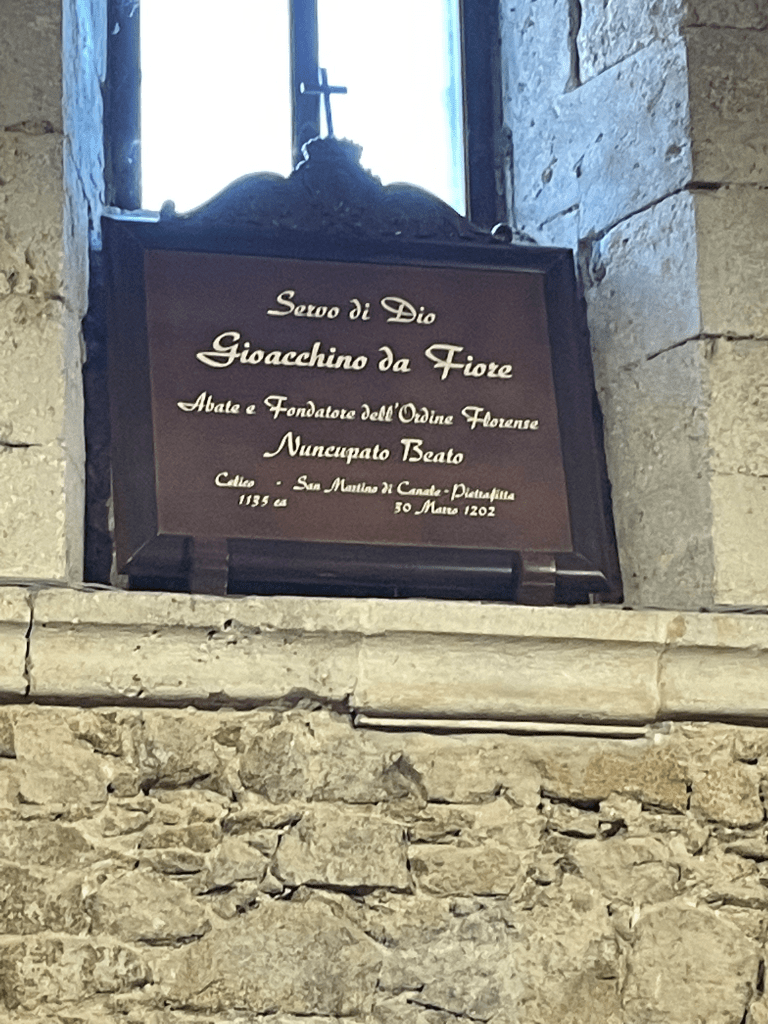
Again from Wikipedia “Joachim of Fiore, also known as Joachim of Flora and in Italian Gioacchino da Fiore (c. 1135 – 30 March 1202), was an Italian Christian theologian, and the founder of the monastic order of San Giovanni in Fiore. According to theologian Bernard McGinn, “Joachim of Fiore is the most important apocalyptic thinker of the whole medieval period.” Later followers, inspired by his works in Christian eschatology (apocalyptic theology) and historicist theories, are called Joachimites.
Apologies for all of the Wikipedia quotes but it keeps me from rambling :-). This was a fascinating tour which left me in a “holy cow!” reaction as I realized what I was looking at but simultaneously knew that the thinking behind it was well beyond my ken. While Joachim of Fiore was never beatified as a saint by the Church, on May 29th each year he is venerated as a “beatus” or one who was blessed. Dante, of Dante’s Inferno was a contemporary of Gioacchino, affirmed that miracles were wrought at the tomb of Joachim of Fiore.
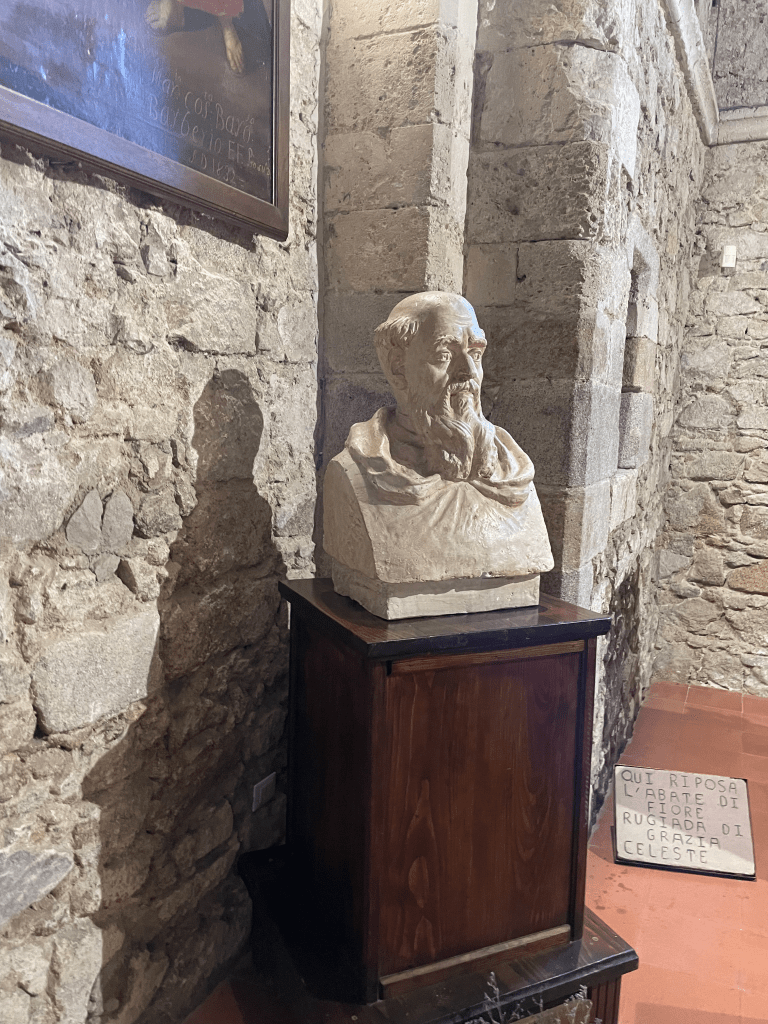
Abbot Gioacchino was a prodigious producer of theological precepts writing three great books : Exposition on the Apocalypse, Enchiridion on the Apocalypse, On the Articles of Faith to Brother John: Confession of Faith as well as using illustrations to illuminate his theological concepts. I will not attempt to go into depth on explaining much about the Abbot as 1.) I would not do it the justice and scholarly insight that it deserves and 2.) If I did attempt 1., I would shortly have an audience of readers that were either bored , confused, or amused as I wrapped myself around the axle trying to explain things of which I truly have no understanding beyond the fact that they exist. So, I am merely going to show you photos of his work, telling you what they are with little to no explanations. If you desire to get a bit more in depth, I would suggest that one start at the following site: https://alchetron.com/Joachim-of-Fiore . Sindaco Succurro gave me a book explaining the illustrations of the Abbot which is written entirely in Italian. So, I have a reason to further my studies of the language :-). I am presenting the drawings in the order they are displayed in the exhibit. Having said that, here goes.
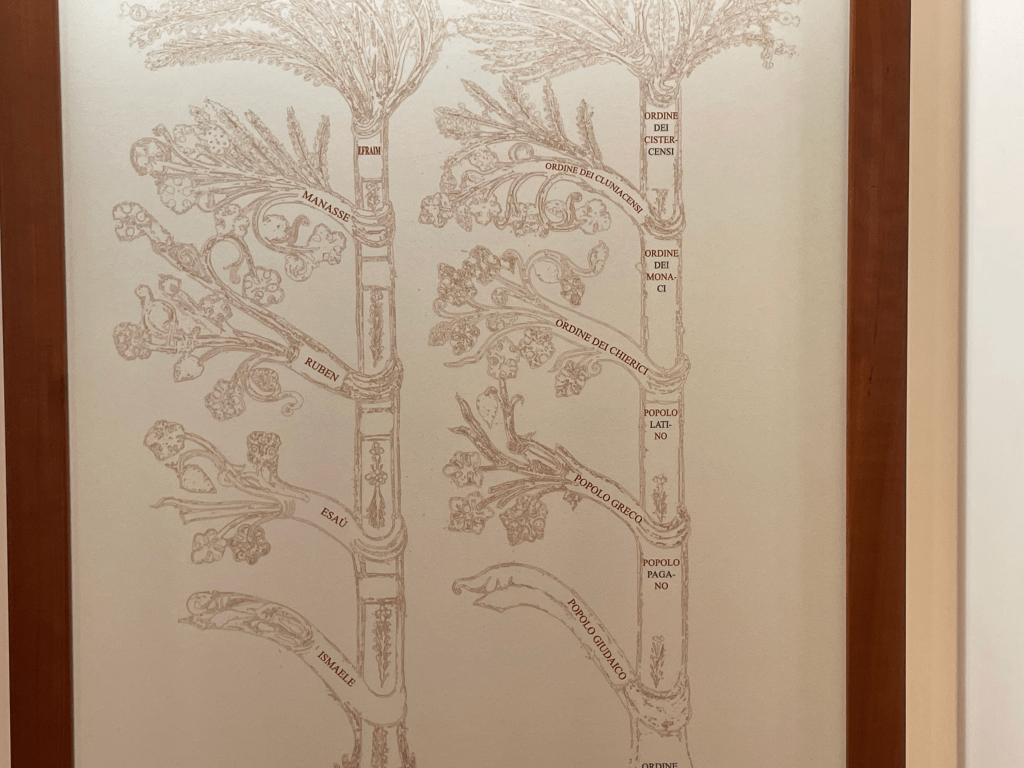
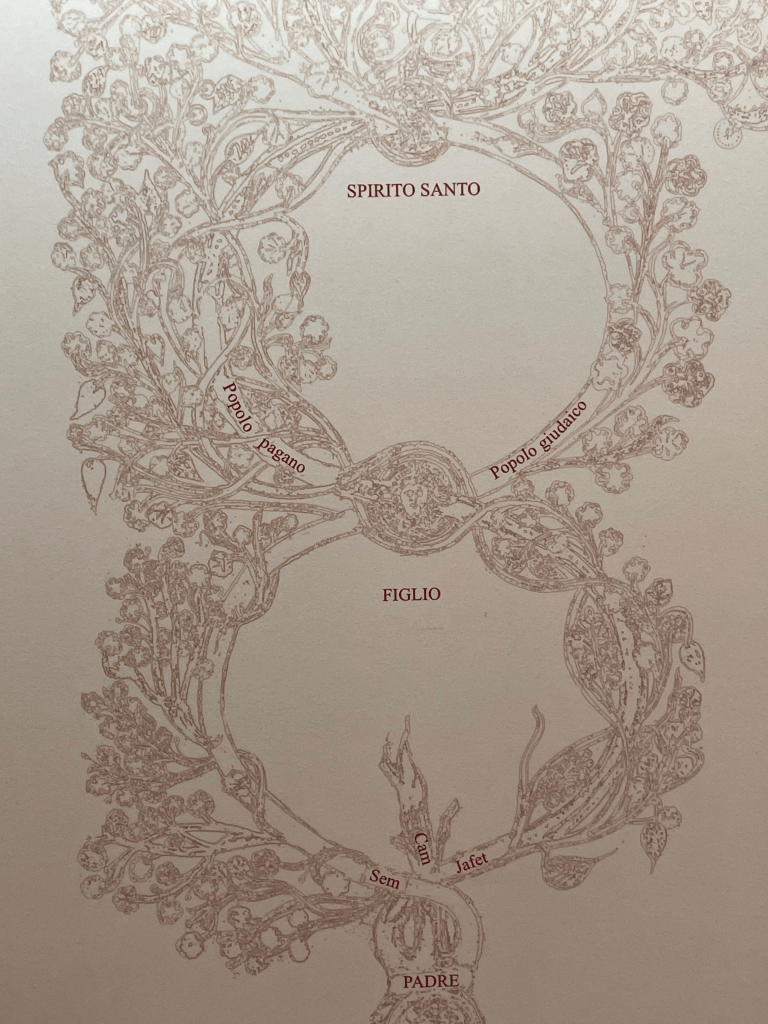
Just for some context, many of the images attempt to illustrate the Abbot’s concept of the “Three ages of man”. The age of the Father, The Age of the Son and the age of the Spirit corresponding to the Holy Trinity.
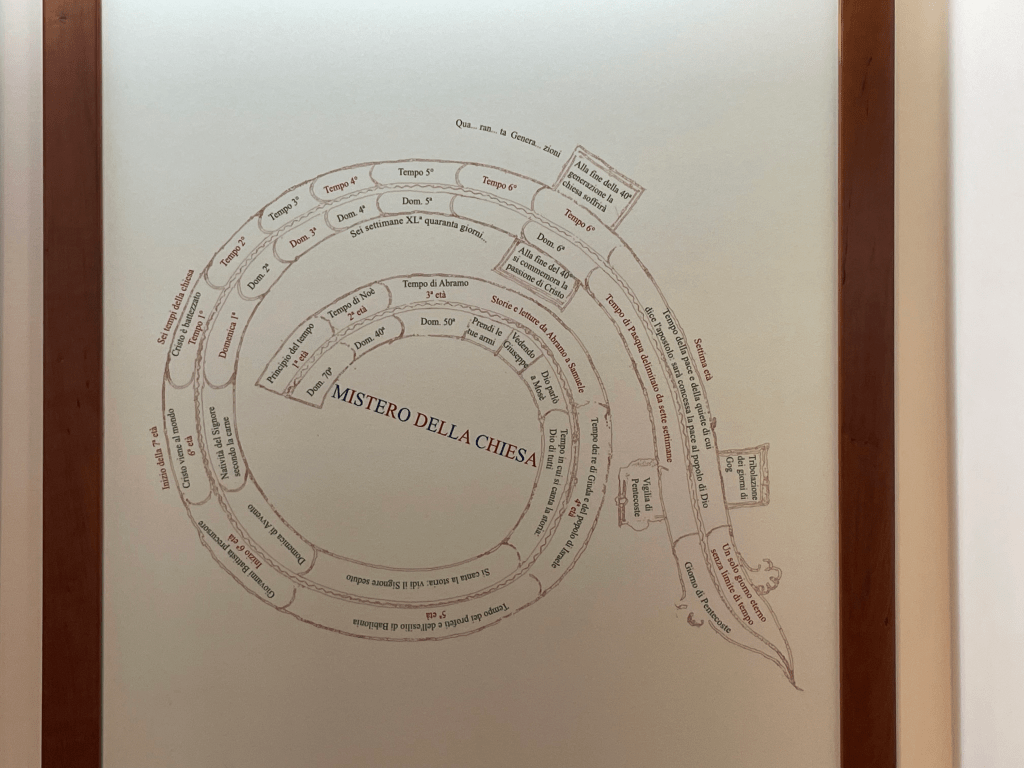
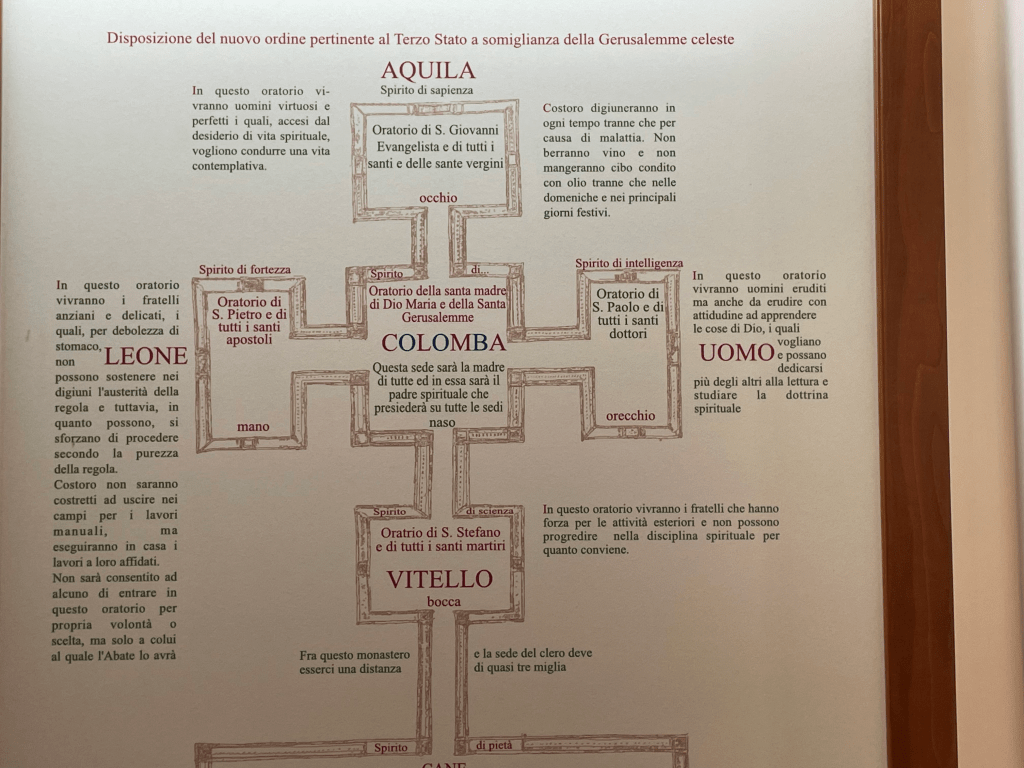
Honestly, I find much of what is presented in this exhibit to be fascinating, much as I was fascinated with “A Brief History of Time” by Stephen Hawking. But I understand these concepts about at the same level as I do Hawking’s discussion on “String Theory” LOL.
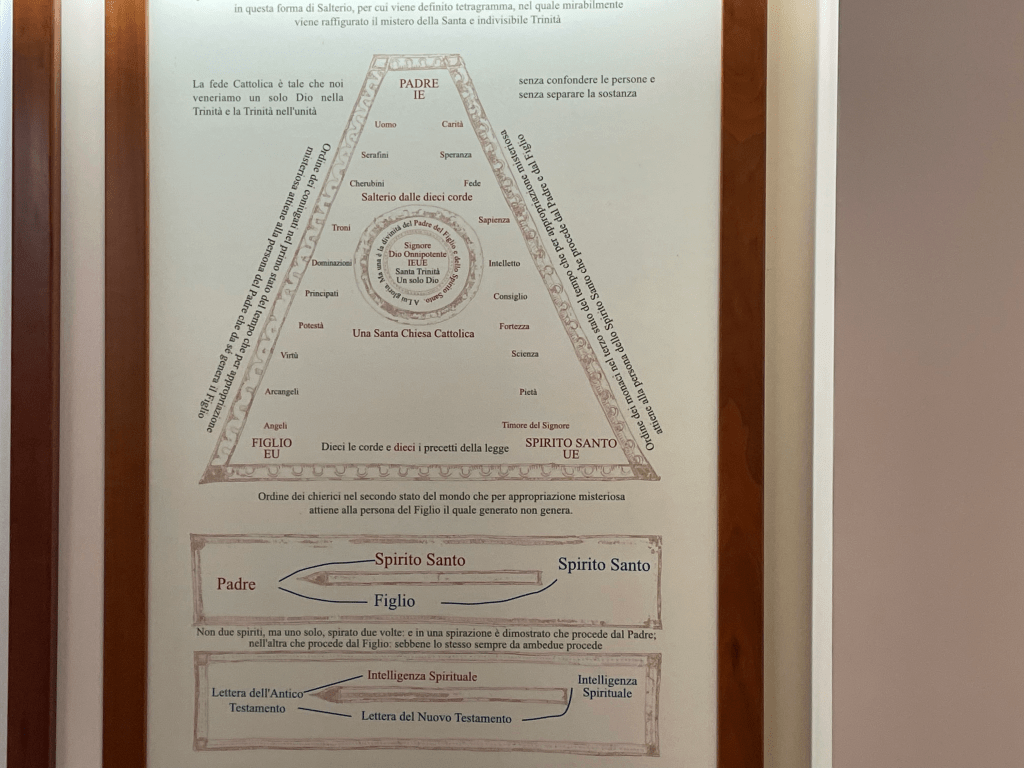
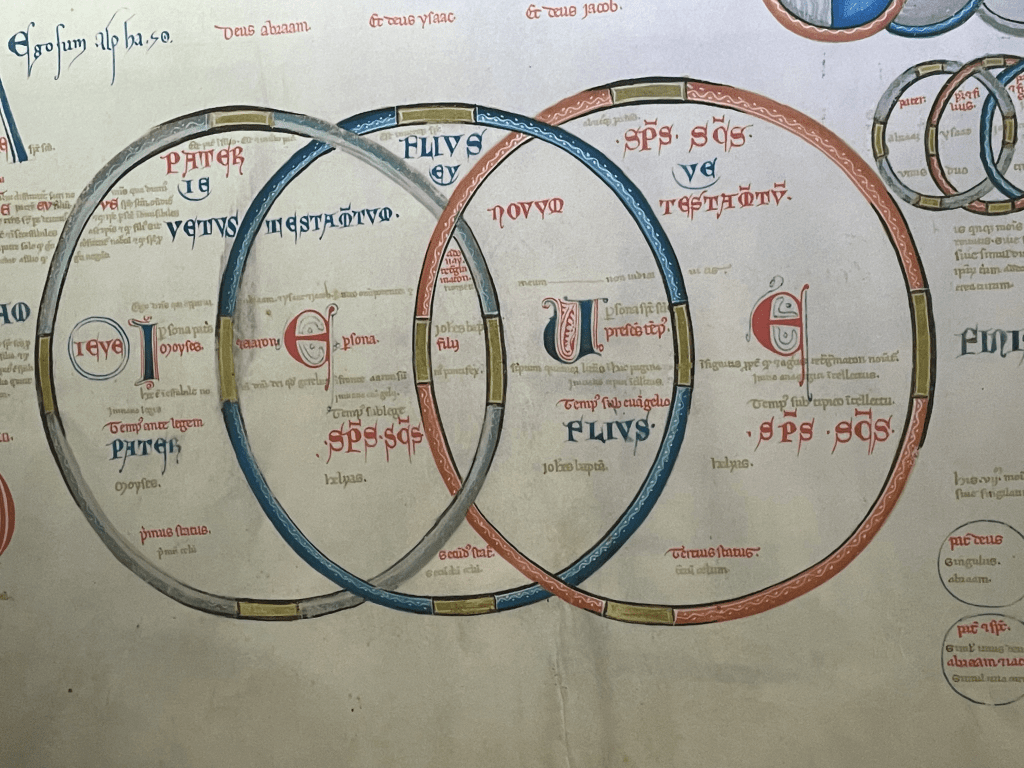
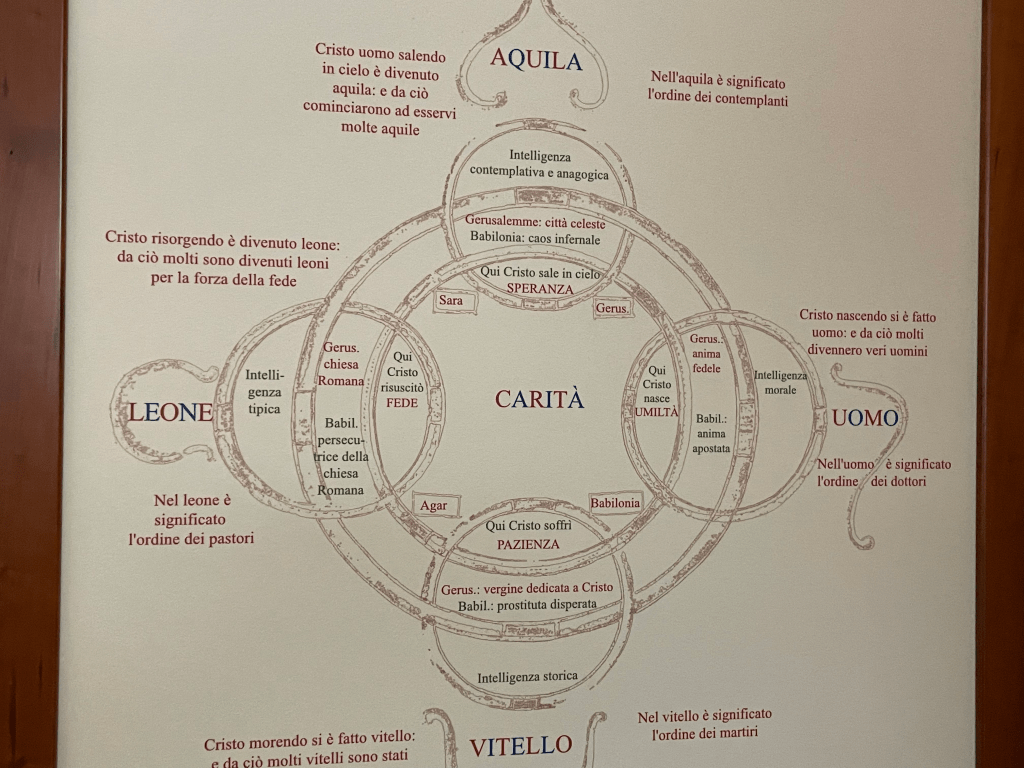
Just being honest, it was not until I saw this illustration that I realized what I was looking at from a theological standpoint and only then because I remembered Ezekiel’s Wheel from reading the Bible (honestly, I’m about 80% through).
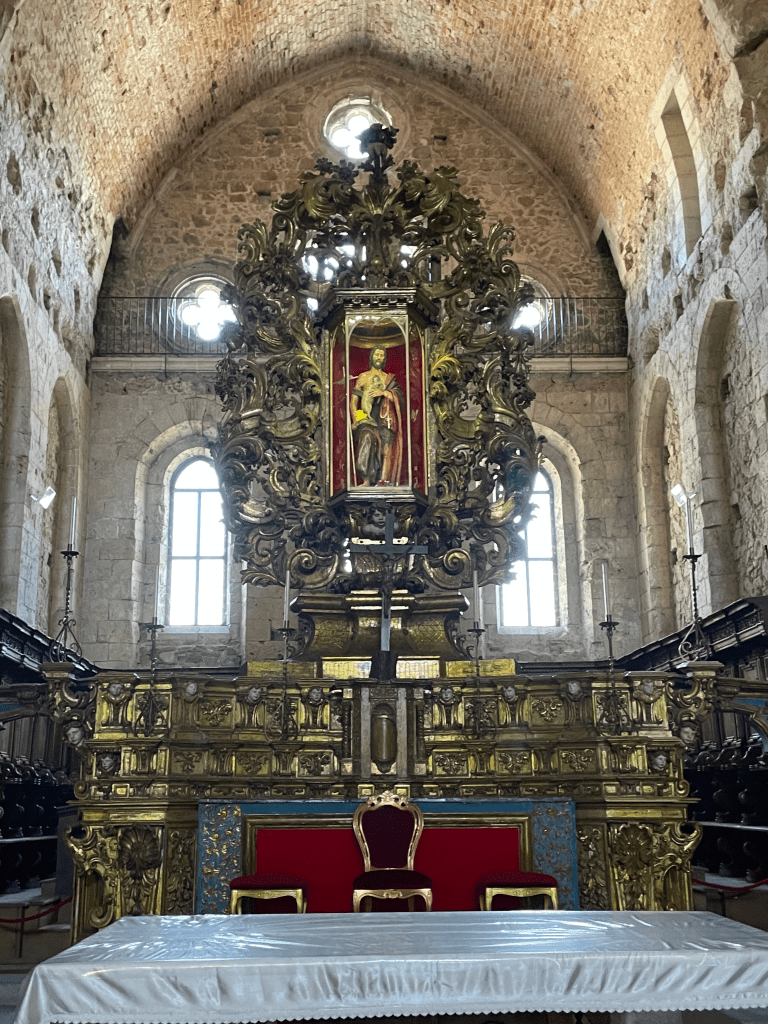
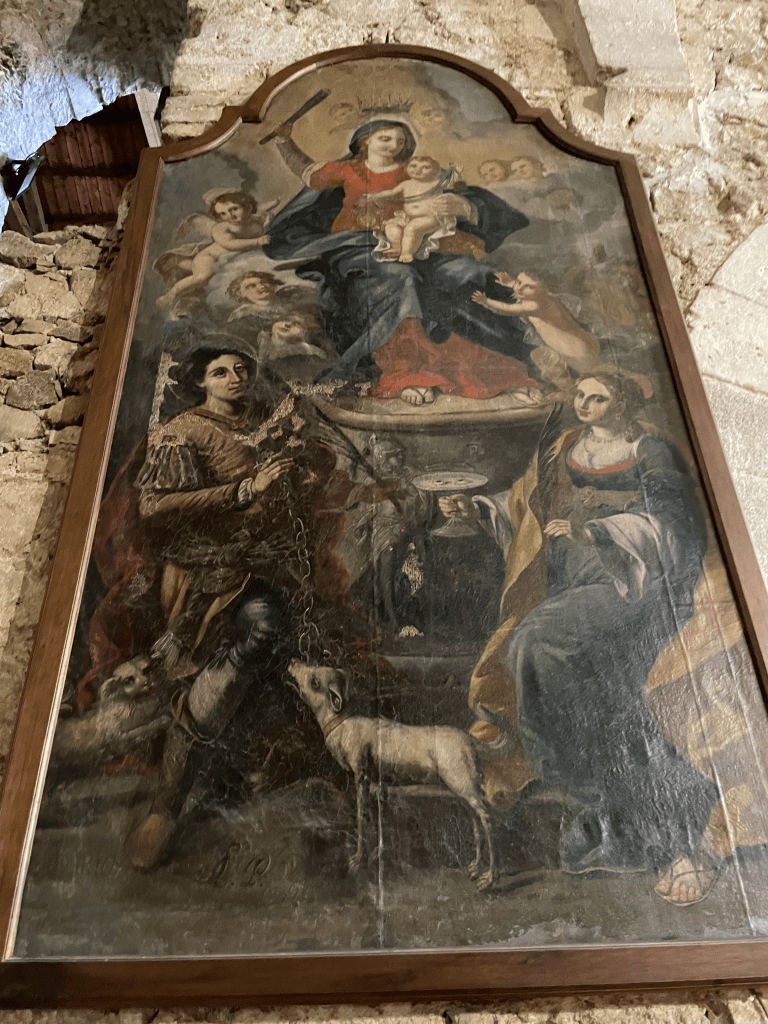
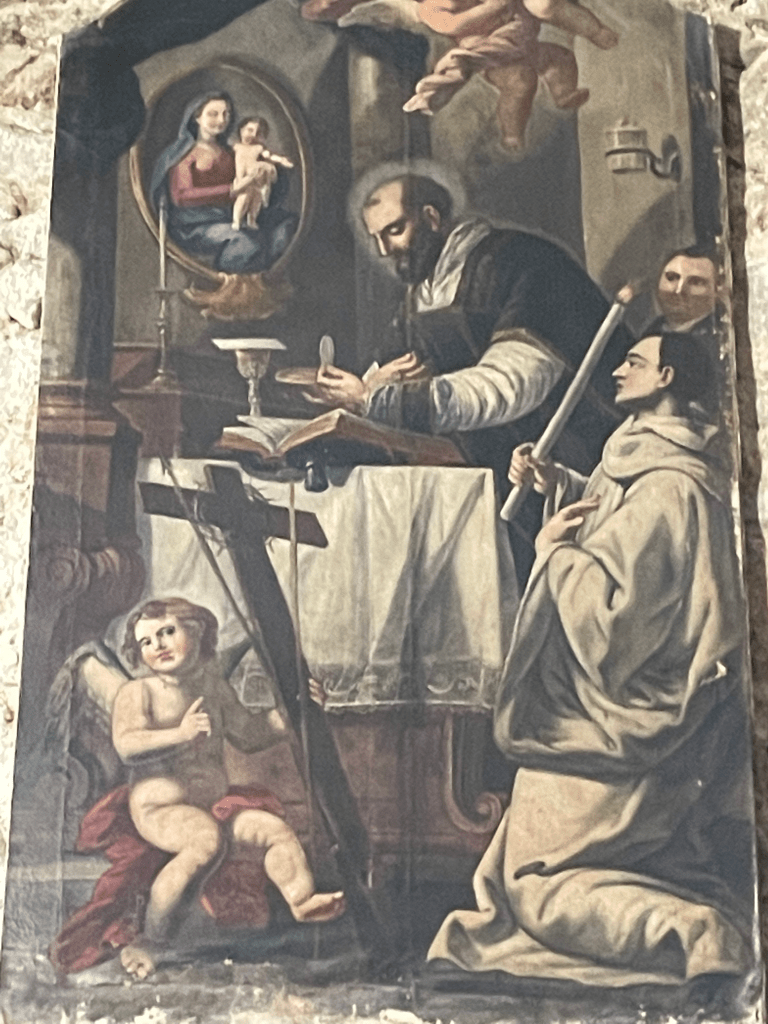
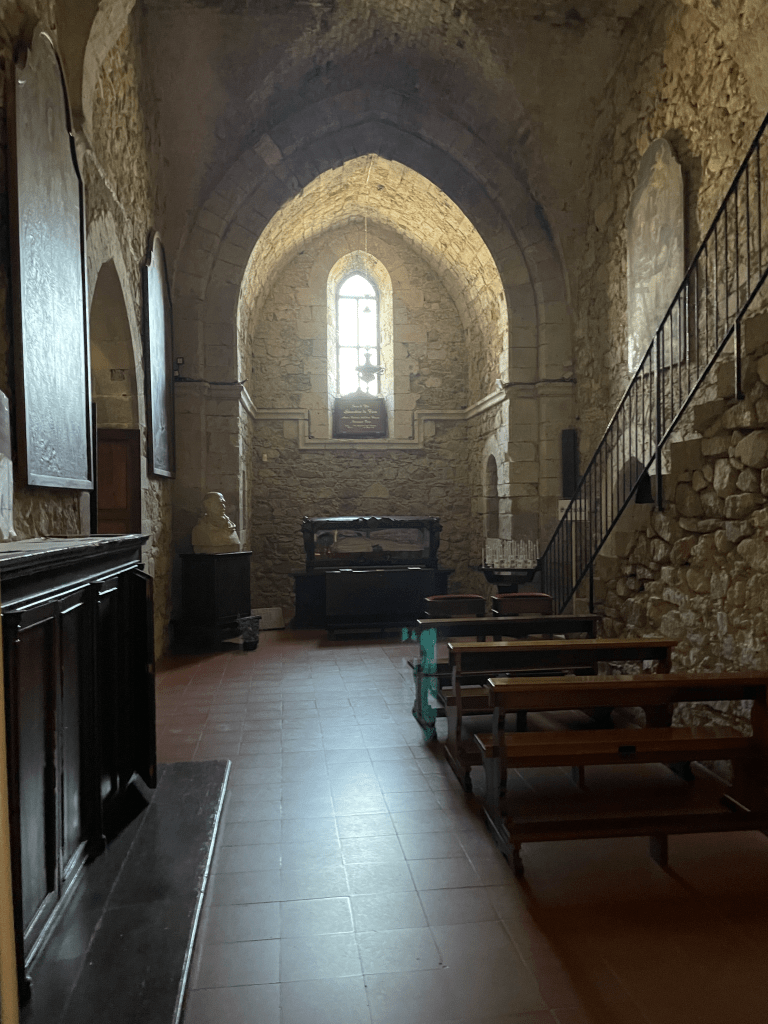
We then moved into the church itself which, while simple and spartan, which is consistent with the philosophy of Abbot Gioacchino with several beautiful paintings.
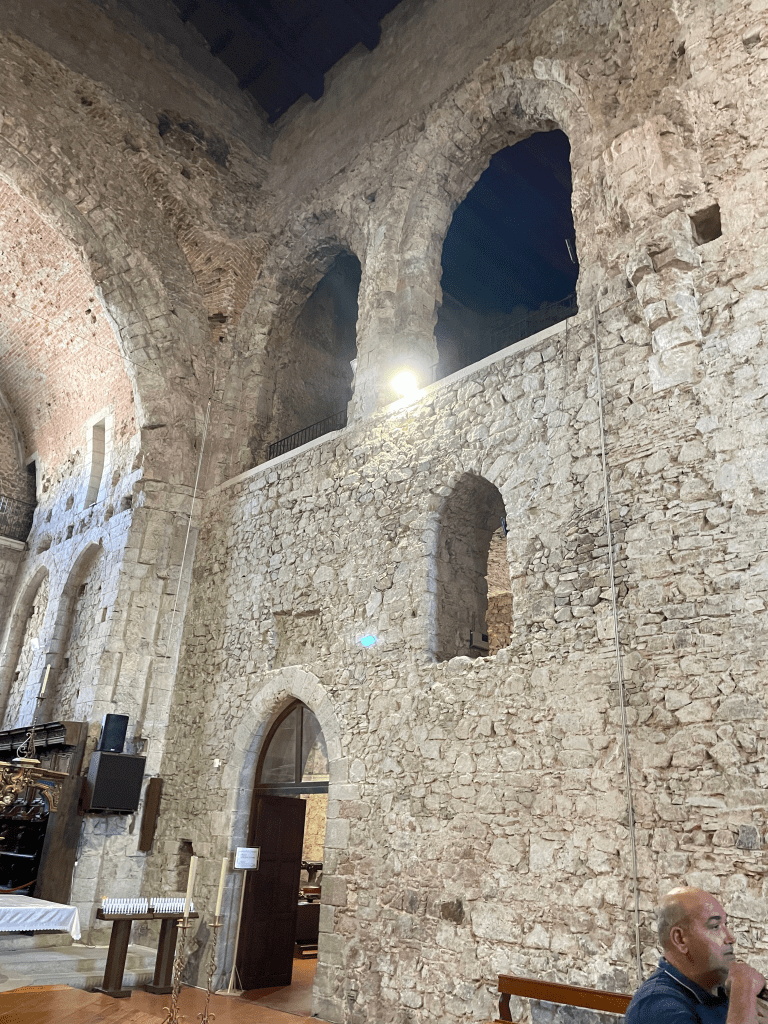
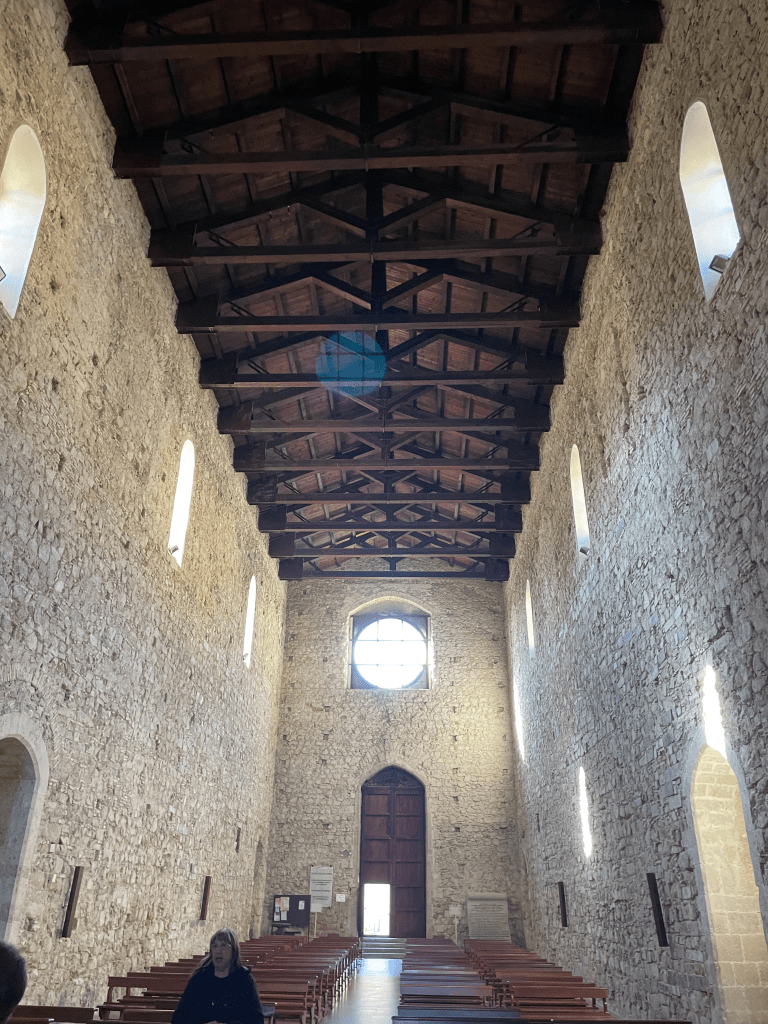
Well, that was a lot of ground to cover and this is a good break point. So, next dispatch will be of the Museum of Economy, Labor and Social History. Till then, Ciao!
 Lou Hikes?